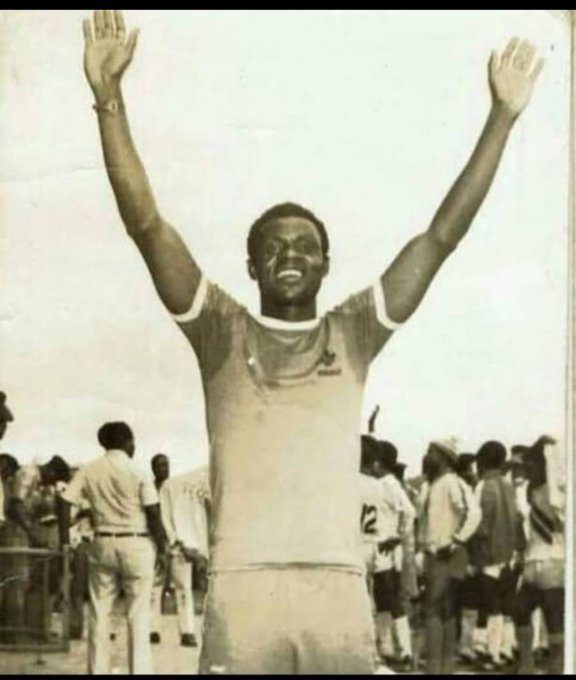
Nigeria is mourning the death of Lawrence Onweazu Okonji, one of the nation’s most admired early-era football figures, following confirmation from multiple Nigerian media outlets that the former Super Eagles striker has died at the age of 83.
His passing marks the loss of a player whose influence helped shape the identity of Nigerian football during its formative decades.
Okonji represented Nigeria from 1963 to 1973, a period that saw the national team beginning to define its competitive character on the international stage.
During those ten years, he played alongside some of the country’s most celebrated names, including Joseph Erico, Peter Anieke and Paul Hamilton — players widely viewed as pioneers of modern Nigerian football.
Together, they formed a generation that laid the technical and cultural foundations the Super Eagles would build on in the decades that followed.
Though his career contained numerous memorable performances, Okonji is most fondly remembered for the goal he scored on 6 June 1973 during a farewell match at Lagos Stadium, now known as the Mobolaji Johnson Arena.
The match, organised just before the venue temporarily closed, has long been regarded as a symbolic moment in Nigerian football history.
His goal that day, scored in front of a passionate home crowd, became a fitting tribute to his years of dedication to the national team.
News of his death has prompted tributes from fans, former teammates and sports historians, many of whom credit him with helping elevate the status of the national side during a crucial era of development.
His style of play, often described as intelligent and composed, made him a respected figure both on and off the pitch.
For supporters who witnessed his career firsthand, Okonji represented the virtues of discipline, commitment and quiet leadership.
Beyond his contributions on the field, Okonji has been remembered for the influence he had on future generations of Nigerian players.
His time with the national team coincided with a shift in the country’s footballing ambitions, and he became part of a group that demonstrated Nigeria could compete confidently on the continental stage.
His legacy is preserved not only in the memories of his teammates but also in the stories passed down through the football community.
As Nigeria reflects on his life, Okonji’s death is being described as a profound loss for the nation’s sporting heritage.
His contributions remain etched in the history of the Super Eagles, and his name continues to be associated with a defining period of growth for Nigerian football.
-
 Messi scores in Argentina farewell as Benin beaten 3-0 Oct 7, 2026
 -
Benin hold Argentina to half-time draw as Messi farewell takes centre stage Oct 7, 2026
-
Argentina v Benin: Lionel Messi starts in likely farewell at Monumental Oct 7, 2026
-
Morocco women advance to Olympic qualifying third round after Congo-Brazzaville withdrawal Oct 7, 2026




-
AFCON 2025: Fixtures, Results, Scores and Standings Jan 18, 2026
-
Match hero Taiwo Awoniyi reflects on team effort after Chelsea triumph May 5, 2026
-
Leadership and long-term vision key to rescuing Zamalek and inspiring Egyptian football – Hany Abou Rida Nov 5, 2025
-
South African giants Orlando Pirates set to lose influential forward Monnapule Saleng Mar 19, 2025




-
Croatia face Spain with Nations League hopes on the line in Split Oct 5, 2026
-
France v Belgium: Probable line-ups for Nations League clash Oct 3, 2026
-
Morocco coach Mohamed Ouahbi refuses to single out player after Mali draw Oct 4, 2026
-
Noussair Mazraoui leaves Morocco squad early after injury Oct 2, 2026