Senegal set Kenya test in Türkiye after Brazil clash
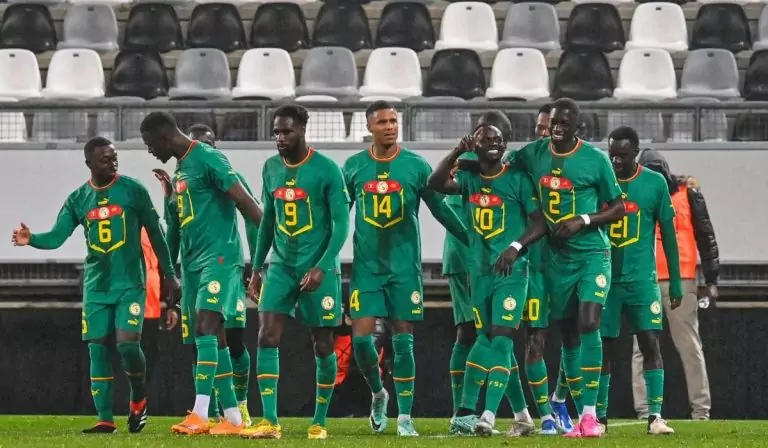
Senegal continue AFCON 2025 preparations with a friendly against Kenya on 18 November at the Mardan Sports Complex in Antalya, Türkiye.
The Senegalese Football Federation confirmed the fixture, along with kick-off at 3:00 PM GMT, days after finalising logistics.
The match lands just three days after a high-profile showdown against Brazil in London on 15 November.
Pape Thiaw now shifts attention to squad balance, depth, and tactical detail ahead of the continental tournament in Morocco.
The Brazil game offers pedigree, pressure, and tempo, but the Kenya match carries structure, strategy, and experimentation.
Thiaw wants to stretch his selection, test alternatives, and sharpen systems before final decisions arrive.
Kenya, absent from AFCON 2025, offer competitive intensity without shifting Senegal’s focus away from preparation targets.
The Harambee Stars bring organisation, transition play, and enough bite to demand concentration in key phases.
This suits Senegal’s plan to rehearse scenarios without losing control of output or confidence.
Kalidou Koulibaly leads a squad rich in experience, leadership, and international exposure.
The team owns rhythm, mobility, and game management skills central to tournament football.
Senegal enter this window as one of Africa’s most consistent units since their 2021 AFCON triumph.
Consistency now meets expectation, and expectation carries its own pressure.
Group D in Morocco pairs Senegal with Benin, Botswana, and the Democratic Republic of Congo.
The Lions of Teranga start the campaign as favourites, but they refuse to approach the group with reduction or comfort.
Thiaw wants multi-layered answers, not just a winning plan A.
The coaching staff rates formation flexibility, controlled build-up, and defensive timing as priorities before AFCON kickoff.
This window offers a controlled environment to measure response, discipline, spacing, and chemistry between units.
Senegal do not chase spectacle in friendlies, they chase clarity, structure, and player connectivity.
Kenya, although outside AFCON, play with national pride, pace, and competitive tempo.
Their midfield energy, quick passing spells, and willingness to disrupt rhythm provide useful examination points for Senegal.
The game allows Thiaw to test fringe players, audition depth roles, and measure game impact beyond the core starters.
The technical staff want progress that shows, not sound that fades.
Senegal build their final AFCON shape match by match, player by player, question by question.
They test rotations, recovery timing, set-piece organisation, and how quickly problems find solutions on the pitch.
Türkiye offers neutral ground, stable conditions, and minimal distraction for targeted preparation.
This window blends prestige, planning, and performance detail, all without compromising competitive intent.
Two matches, two moods, two assignments, but one mission connects both.
Senegal want momentum, not noise.
They want answers, not assumptions.
They want performance alignment, not loose potential.
Kenya stand next in line to sharpen Senegal’s edge before AFCON pressure turns theoretical plans into live demand.
All focus now turns to Antalya, detail execution, and another step toward tournament readiness.
-
 Barcelona fear Lamine Yamal could miss out on 2026 Ballon d’Or Oct 26, 2026
 -
Kaizer Chiefs coach Da Cruz shifts focus to domestic competitions after Africa heartbreak Oct 26, 2026
-
Hakimi, Bounou and Bouaddi put Morocco in the Ballon d’Or spotlight Oct 26, 2026
-
Red Arrows coach Chisi Mbewe rewarded with Toyota Mark X after eliminating Kaizer Chiefs Oct 26, 2026




-
AFCON 2025: Fixtures, Results, Scores and Standings Jan 18, 2026
-
Match hero Taiwo Awoniyi reflects on team effort after Chelsea triumph May 5, 2026
-
Leadership and long-term vision key to rescuing Zamalek and inspiring Egyptian football – Hany Abou Rida Nov 5, 2025
-
South African giants Orlando Pirates set to lose influential forward Monnapule Saleng Mar 19, 2025




-
Barcelona v Real Madrid: Catalans backed at 1.65 to win October Clasico Oct 23, 2026
-
Barcelona and Real Madrid meet in pivotal 265th Clasico Oct 23, 2026
-
Champions League: PSG beat Barcelona as Liverpool complete comeback against Villarreal Oct 20, 2026
-
Inter Milan v Fiorentina: probable line-ups for San Siro clash Oct 24, 2026