Vladimir Petković’s sixth substitution explained after Amine Gouiri’s injury against Uganda
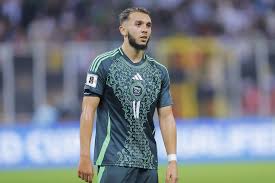
During Algeria’s 2-1 victory over Uganda at the Hocine Aït-Ahmed Stadium in Tizi Ouzou, head coach Vladimir Petković was able to make an unexpected sixth substitution after Amine Gouiri suffered a head injury — despite having already used all five permitted changes.
The move puzzled many observers, but it was fully in line with the current laws of the game.
The incident occurred when Gouiri collided violently with the Ugandan goalkeeper midway through the second half.
Both players were unable to continue and were taken to hospital for medical evaluation.
At that stage, Petković had already exhausted his five standard substitutions.
However, he was still able to send on Nabil Bentaleb to replace the injured forward.
The explanation lies in a specific clause in football’s regulations that allows an additional substitution in cases of suspected concussion.
Under Law 3.2 (Players) of the International Football Association Board (IFAB), teams are permitted to make one extra concussion substitution during a match, regardless of how many normal substitutions have already been made.
In essence, the rule prioritises player safety above tactical constraints.
It allows teams to replace a player showing signs of head trauma immediately, without penalty.
Unlike the standard substitution rule — which allows five changes in three separate windows, plus a possible sixth in extra time — this provision can be applied at any point during regular time if a concussion is suspected.
Crucially, match officials have no authority to determine whether a head injury qualifies for this special substitution.
According to IFAB guidelines, referees and their assistants “are not authorised to decide whether a potential or actual injury allows for the use of a concussion substitution.”
Their role is limited to assisting with communication and ensuring the player receives medical attention.
If officials suspect improper use of the rule, they may report the incident to the relevant competition authorities after the match, but the immediate decision lies solely with the team’s medical staff.
By invoking this rule, Petković acted within the framework designed to protect players’ health and safety.
It ensures that footballers suffering potential concussions are removed from play immediately rather than being forced to continue because all substitutions have been used.
Gouiri’s injury, though unfortunate, therefore highlighted an important evolution in the game’s approach to head injuries — one that prioritises welfare over results.
-
 Morocco face Argentina with Women’s Under-17 World Cup place at stake Oct 23, 2026
 -
MC Alger need a historic comeback to keep African Champions League hopes alive Oct 23, 2026
-
Barcelona and Real Madrid tracking Aston Villa midfielder Johan Manzambi Oct 23, 2026
-
Nagida shines as Rennes hold Juventus to 2-2 draw Oct 23, 2026



-
AFCON 2025: Fixtures, Results, Scores and Standings Jan 18, 2026
-
Match hero Taiwo Awoniyi reflects on team effort after Chelsea triumph May 5, 2026
-
Leadership and long-term vision key to rescuing Zamalek and inspiring Egyptian football – Hany Abou Rida Nov 5, 2025
-
South African giants Orlando Pirates set to lose influential forward Monnapule Saleng Mar 19, 2025




-
PSG v Barcelona: fiery attacks set up Champions League classic at Parc des Princes Oct 18, 2026
-
Champions League: PSG beat Barcelona as Liverpool complete comeback against Villarreal Oct 20, 2026
-
Real Betis v Barcelona: kick-off time, TV details and match preview Oct 16, 2026
-
PSG beat Barcelona 4-2 in Champions League thriller Oct 21, 2026