Cameroon Sports Ministry criticises Samuel Eto’o and Fecafoot after Cape Verde defeat
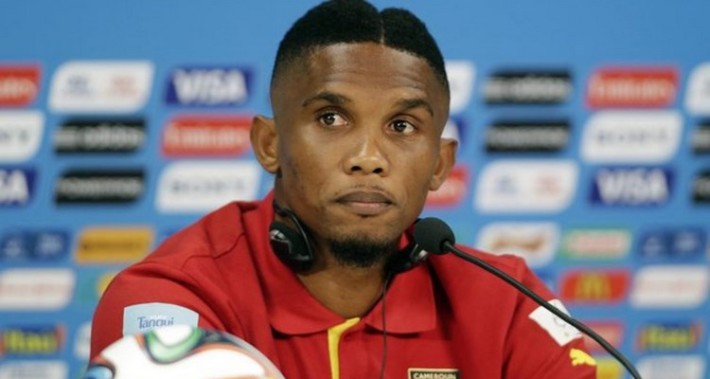
Cameroon’s Ministry of Sports has issued a scathing criticism of the country’s football federation (Fecafoot) and its president, Samuel Eto’o, in the aftermath of the Indomitable Lions’ 1-0 defeat to Cape Verde in the 2026 World Cup qualifiers.
Cyrille Tollo, technical advisor to the Ministry of Sports, openly questioned Fecafoot’s handling of the national team setup, pointing specifically to the absence of Joachim Mununga, assistant to head coach Marc Brys, from the bench during the match.
Speaking on CRTV’s football programme Fou Fou Foot, Tollo argued that Mununga’s exclusion had played a role in the team’s failure.
“Mununga’s absence from the Indomitable Lions’ bench was one of the causes of the defeat against Cape Verde,” Tollo declared, suggesting that decisions surrounding technical staff appointments had disrupted team cohesion.
The remarks reflect deepening tensions between the Ministry of Sports and Fecafoot, which have been embroiled in disagreements since Marc Brys was appointed head coach earlier this year.
While the Ministry endorsed Brys and his chosen assistants, Fecafoot has repeatedly resisted certain appointments, with Mununga frequently sidelined from the bench in recent fixtures.
This latest dispute has intensified scrutiny on Eto’o, whose leadership of Fecafoot has faced growing criticism in recent months. Once celebrated for his ambition to modernise Cameroonian football, the former striker has increasingly found himself at the centre of institutional conflicts that many believe are damaging the performance of the national team.
The defeat to Cape Verde, a result that dented Cameroon’s hopes of qualifying comfortably for the 2026 World Cup, has amplified calls for clarity and unity at the top of the country’s football structure.
Supporters and analysts alike argue that the ongoing wrangles between Fecafoot and the Ministry are distracting players and undermining the team’s chances on the pitch.
For Tollo, the issue goes beyond one defeat. His comments reflect a broader frustration over what he and others see as a pattern of interference and poor decision-making by Fecafoot under Eto’o’s leadership.
“This is not the first time we have seen such sidelining of technical staff,” he noted, pointing out that the absence of key assistants disrupts tactical preparation and affects the trust between players and management.
Mununga, who has been integral to Brys’ coaching team, has developed strong relationships with several squad members and is regarded as a vital link in the chain of communication between the head coach and players. His continued absence from the bench has been described by insiders as a blow to both morale and tactical organisation.
The controversy leaves Brys in a difficult position, caught between the Ministry that appointed him and the federation that employs him. While the Belgian coach has tried to maintain focus on footballing matters, the political battles around him threaten to overshadow his work.
Cameroon’s defeat to Cape Verde has therefore become more than just a setback in qualification—it has become a flashpoint in the ongoing power struggle between state authorities and Fecafoot. With pressure mounting on Eto’o, calls for dialogue and compromise are growing louder, as many fear that further disputes could derail the Indomitable Lions’ campaign altogether.
As the national team prepares for its next fixtures, the spotlight will remain firmly on whether Cameroon’s football leadership can resolve its internal conflicts.
For now, the Ministry’s sharp criticism signals that tensions with Fecafoot are far from easing, leaving the Indomitable Lions to navigate both battles on the field and discord off it.
🔴 Cyrille Tollo : « Il n y a plus de conflits ouverts entre le ministère et la FECAFOOT. Il ne reste qu’un seul problème aujourd’hui : le fait que Mununga ne soit pas sur le banc de touche. À part cela, nous travaillons en toute intelligence avec la FECAFOOT. C’est elle qui… pic.twitter.com/ueh238W0O7
— AllezLesLions (@AllezLesLions) September 15, 2025
-
 Ousserir urges patience as Luca Zidane begins new Leganes chapter Aug 26, 2026
 -
Wilfried Singo chooses Istanbul future as Damac FC make Saudi approach Aug 26, 2026
-
Lille v PSG: Andre set to return as Luis Enrique considers defensive reshuffle Aug 26, 2026
-
Liverpool v Nottingham Forest: Reds backed to deliver goals in Anfield test Aug 26, 2026


-
AFCON 2025: Fixtures, Results, Scores and Standings Jan 18, 2026
-
Leadership and long-term vision key to rescuing Zamalek and inspiring Egyptian football – Hany Abou Rida Nov 5, 2025
-
South African giants Orlando Pirates set to lose influential forward Monnapule Saleng Mar 19, 2025
-
Full schedule for 2025 Africa Cup of Nations in Morocco confirmed Feb 12, 2025