Burkina Faso unveils renovated August 4th Stadium with grand ceremony and African football legends
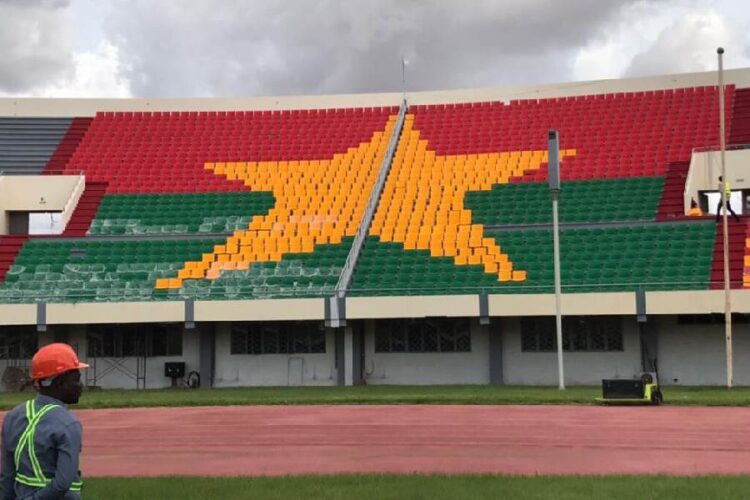
The August 4th Stadium in Ouagadougou has officially reopened after four years of extensive renovation, marking a significant milestone for Burkinabe sports infrastructure.
The upgraded facility was inaugurated on Monday, August 4, in a ceremony attended by Burkina Faso’s Head of State, Captain Ibrahim Traoré.
The restoration project encompassed comprehensive improvements, including upgrades to the stadium’s stands, playing surface, changing rooms, sound system, and floodlighting. The enhancements now position the stadium to host national and international matches in line with modern standards.
The reopening ceremony featured an impressive mix of festivities, including musical performances, parachute displays, and the unveiling of the Burkinabe national team’s new official jersey. Dubbed Victory Ditanyè, the jersey pays homage to the nation’s identity, incorporating the symbolic colours of the Burkinabe flag.
As part of the celebrations, a gala match brought together a host of African football legends, generating significant excitement among fans.
The event saw the participation of iconic figures such as Samuel Eto’o (Cameroon), Jay-Jay Okocha (Nigeria), El-Hadji Diouf (Senegal), Emmanuel Adebayor (Togo), and Rigobert Song (Cameroon), who delighted spectators with their enduring flair and charisma on the pitch.
Former stars of Burkinabe football also graced the occasion, with Adama Guira, Alain Traoré, and Charles Kaboré representing the host nation. Their presence added a local touch to the high-profile gathering, highlighting the country’s footballing heritage and ambitions for the future.
The newly renovated stadium is expected to serve as a key venue for Burkina Faso’s domestic football calendar and future international fixtures.
Its modernised facilities now provide an improved experience for players, fans, and officials alike.
The event also symbolised more than just a physical transformation. For many in the country, the reopening of the August 4th Stadium stands as a statement of resilience and renewal, aligning with ongoing efforts to promote national pride and unity through sport.
With the stadium now back in operation, attention will turn to how it can contribute to the development of football in Burkina Faso and the broader West African region.
The government’s investment in the refurbishment underscores a strategic commitment to sport as a vehicle for both national cohesion and international recognition.
As the final whistle blew on the gala match, it was clear that the August 4th Stadium had entered a new era—not only as a venue for competition but also as a symbol of Burkina Faso’s aspirations on and off the field.
-
 Will anyone stop re-election of Infantino as Fifa president? Oct 11, 2026
 -
Yan Diomande dedicates first Real Madrid goal to late sister after emotional Villarreal winner Oct 11, 2026
-
Sion Oppong scores first Toulouse goal to earn draw at AS Monaco Oct 11, 2026
-
Edan Diop shines for AS Monaco with goal and assist in Toulouse draw Oct 11, 2026



-
AFCON 2025: Fixtures, Results, Scores and Standings Jan 18, 2026
-
Match hero Taiwo Awoniyi reflects on team effort after Chelsea triumph May 5, 2026
-
Leadership and long-term vision key to rescuing Zamalek and inspiring Egyptian football – Hany Abou Rida Nov 5, 2025
-
South African giants Orlando Pirates set to lose influential forward Monnapule Saleng Mar 19, 2025




-
Croatia face Spain with Nations League hopes on the line in Split Oct 5, 2026
-
Manchester United host winless Tottenham in Premier League clash Oct 7, 2026
-
Morocco coach Mohamed Ouahbi refuses to single out player after Mali draw Oct 4, 2026
-
Lens v Lyon: Can the in-form visitors extend their unbeaten Ligue 1 run? Oct 6, 2026