Hicham Boudaoui credits Vladimir Petković for boosting his Algeria career
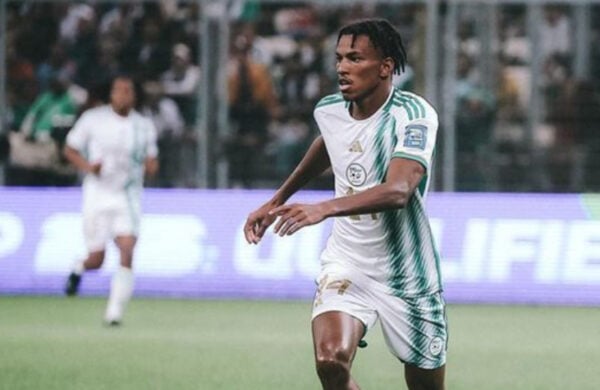
Hicham Boudaoui has heaped praise on Algeria’s new coach Vladimir Petković, attributing a profound shift in his national team performance to the Bosnian–Swiss manager’s arrival.
The OGC Nice midfielder admitted that prior to Petković’s appointment, he lacked self-belief in the Algerian setup. Speaking in an open and sincere interview with beIN Sports, Boudaoui said: “Before, I lacked confidence with the Algerian national team.
But since the arrival of Vladimir Petković, everything has changed.” Once consistently deployed as a substitute during Djamel Belmadi’s tenure, the 24-year-old now finds himself a regular starter under the new regime.
Boudaoui described the transition as liberating. “I was always afraid of making a mistake, whether it was in a pass or a shot,” he reflected, acknowledging the weight of pressure he felt under the previous coach.
Many observers read his comments as implicit criticism of Belmadi’s approach, which appeared to limit the midfielder’s opportunities and freedom on the field.
Since Petković took over, Boudaoui has adopted a more confident and assertive style. “With the new coach, I finally gained the confidence I needed,” he said. He further praised the professional methods introduced by the former Lazio, Switzerland, and Bordeaux manager, noting: “He works in a way that resembles that of European clubs. His method is very professional.”
Under Petković’s stewardship, Boudaoui has flourished, becoming a key element of the midfield. His improved form is now seen as vital to Algeria’s preparations ahead of the 2025 African Cup of Nations in Morocco, a tournament Boudaoui views as a major opportunity for national redemption.
Boudaoui emphasised the unity and ambition he now sees in the national squad. “We will do everything to make the Algerian people proud,” he declared. Recognising the critical role of fan support, he added: “The fans must continue to support us, and for our part, we promise to give our all to achieve their expectations.”
In a heartfelt plea, Boudaoui asked supporters for their patience: “I ask them for patience and to support us in all circumstances. We will do everything to reward them.” His message combined humility with a vow to produce performances worthy of the Algerian people.
Reflecting on Petković’s methods, Boudaoui described his training sessions as rigorous and modern. The coach’s tactical precision, emphasis on positional discipline, and psychological support have enabled him and his teammates to display greater consistency and confidence.
As a result, the midfield unit is producing more creative play and better defensive coverage, both crucial as Algeria seeks to re-establish itself among Africa’s leading footballing nations.
Boudaoui’s words are backed by his recent performances. Since Petković took charge, the midfielder has featured prominently in qualifiers and friendlies, often praised for his crisp passing, strategic movement, and calm under pressure.
That consistency has led to calls from fans and analysts for more trust in younger players, suggesting that Boudaoui’s flourishing form could usher in a broader era of opportunity for emerging talents.
As the AFCON approaches, Boudaoui and Algeria appear to be heading in the direction of renewed confidence and cohesion. His admiration of Petković’s influence highlights a turning point, not just for his own role but for the national team’s collective identity—a blend of professional structure, tactical clarity, and psychological reassurance.
In Boudaoui’s eyes, the transformation under Petković is opening new doors. Whether that momentum can be sustained when the big games begin in 2025 remains to be seen, but for now at least, the midfielder is clear in his belief: under Petković, his national team journey has found its stride at last.
-
 Morocco face Argentina with Women’s Under-17 World Cup place at stake Oct 23, 2026
 -
MC Alger need a historic comeback to keep African Champions League hopes alive Oct 23, 2026
-
Barcelona and Real Madrid tracking Aston Villa midfielder Johan Manzambi Oct 23, 2026
-
Nagida shines as Rennes hold Juventus to 2-2 draw Oct 23, 2026



-
AFCON 2025: Fixtures, Results, Scores and Standings Jan 18, 2026
-
Match hero Taiwo Awoniyi reflects on team effort after Chelsea triumph May 5, 2026
-
Leadership and long-term vision key to rescuing Zamalek and inspiring Egyptian football – Hany Abou Rida Nov 5, 2025
-
South African giants Orlando Pirates set to lose influential forward Monnapule Saleng Mar 19, 2025




-
PSG v Barcelona: fiery attacks set up Champions League classic at Parc des Princes Oct 18, 2026
-
Champions League: PSG beat Barcelona as Liverpool complete comeback against Villarreal Oct 20, 2026
-
Real Betis v Barcelona: kick-off time, TV details and match preview Oct 16, 2026
-
PSG beat Barcelona 4-2 in Champions League thriller Oct 21, 2026